Wednesday, February 21, 2018

A date with Seagate: The future of HDD storage in times of SSD, IoT and Cloud.


Seagate, the American storage tech company, has been making Hard Disk Drives for a better part of almost 40 years now. The company began its journey to transform data storage back in 1978, as Shughart Technology, named after its ex-IBM co-Founder Alan Shugart. At the time, the company’s first product was a 5.25-inch HDD with a mere 5MB of storage capacity, the first disk drive in the world to fit in that form factor. Here’s what it looked like back then -


Fast Forward 39 years and the company’s most premium HDD tops at 10TB of storage, with plans to release a 20TB storage monster by 2020. However, in this era of cloud, and a much smaller, faster and durable alternative in the form of Solid-state drives (SSDs), not to forget toughened competition from rival WD, Seagate faces multiple growth challenges which it has to overcome.
We spoke to the company’s Senior Vice President for Global Sales & Marketing, Ban Seng Teh, on the sidelines of a forum organised by the company in Singapore. Here is what he had to share

B.S. Teh, SVP -  Global Sales & Marketing, Seagate
Q: What do you have say about the market moving towards SSDs?
A: Let me cite some figures from several research companies. There are two ways of looking at this. If you look at the revenue from HDD and SSD today, the revenue from HDD is still 50% greater than the revenue from SSD. The revenue for SSD is growing faster when compared to HDD. But the probably after 5 years, it will not be the same. Overall the revenue from both HDD and SSD is growing. We would like to lead in the HDD space. But then, a lot of players are playing in this 20 billion dollar business. So in short, we see SSD as growing very quickly and HDD as stable. We are strategising to participate in the growth of the SSD space, but in areas that make sense for us like enterprise SSD space.
Q: What is your SSD strategy? Do you think not having one will hurt the company in the future when the price of flash memory modules go below magnetic disks?
A: What we see is that, especially in the last few years, a crossover if you will, especially in the client environment from HDD to SSD. We have anticipated that and we believe that it’s going to continue to happen. We believe that in 5 years, more than 90% is going to be flash or SSDs for that matter and we know that it’s going to happen. So, the HDD business is going to change. Today, just over 20% of our revenue comes from the PC business. So, we have already seen that migration. More and more of our businesses are moving over to the cloud and the non-PC environment, where we believe the demand for HDDs will continue to be robust, simply becuase they need very very large capacity. We do not believe that the price of flash is going to go down to a price cheaper than HDD. We believe that HDD will continue to exist.
We know that SSD is growing and we have a strategy to participate, We may not be going out to sell NAND Flash to Apple right away. We have to be smart about going to the market with SSD. We have very strong control of the technology we acquired from LSI (a flash supplier now owned by Seagate).
Q: Does Seagate have any plans to enter mobile storage like WD?
A: No, we don’t have any plans for mobiles and cameras. It is a flash domain as there is no value proposition for a hard drive to be there. Regarding entering into the flash space, we are already into building SSDs for the small enterprise markets, but not consumer markets. But then, we are coming up with different solutions for this. We have announced our partnership with DJI at CES. We are not talking about putting a drive in a drone. But, then we wish to help them to stream the data they have collected directly on the drive.
Q: Can you talk about the reasons for the recent shutdown of Seagate’s China HDD plant?
A: Yes. I think it was on January 10, 2017. The reason is that the profile of the industry has changed. We are no longer shipping the volume of units that we were shipping before. We were shipping less units, but those with higher capacity. If you look at this from a factory operations level, they focus more on units. Since the number of units has come down, we don’t need so many factories. But our revenue is growing because we are shipping high capacity drives. To give you a perspective, 5 years ago, the total market size per quarter would go up till 170-180 million units. Today it just goes between 100-110 million units. This is a huge reduction. So earlier when we had an industry factory footprint to support a 180 million business, and now it has come down to 110 million, everybody has got to size their factories down. So it is a part of the evolution or the shift in business.
Q: Can you give us a timeline on the launch of the 16TB and 20TB HDDs?
A: I think it doesn’t need any announcements. Launching such high capacity hard drives is just more of a direction. We believe that we would be able to get to a 18TB drive in 2018 with the kind of technology that we have. We are still developing the roadmap and we are not in the position to comment on when we are going to launch one.
Q: Are these going to be based on the Heat-assisted magnetic recording (HAMR)  technology that you were talking about?
A: No. We are looking at the different technologies that we have access to. We look at the best technology to deploy for a particular drive. At this point, HAMR is the most expensive and the hardest technology. For example, if we can come up with an 18TB Hard Drive in the existing SMR technology, we will come up with that. If we couldn’t do such a thing, we would leapfrog with the technology. So in short, this is just a stepping stage for us. But, in the horizon, HAMRwould be the toughest and the most expensive technology.
Q: Any plans to get the recently showcased Advanced Encryption Software from your Government Solutions portfolio to India?
A: No. We don’t have any plans. But, we have a strong interest in it. We have got already work and development going prior to this with the US Government and security agencies, so it’s easier to extend. Once we have a solution in place, we can bring it to different markets. Yes, we certainly have a plan for this and we are engaging with the local authorities at a regular basis for the implementation of this security feature.
Q: What do you think about reports published by BackBlaze?
A: Naturally, we feel bothered when someone says something negative about the company. We take everything very seriously to see if there is any truth in what they are writing about. We have direct contact with BackBlaze and we talk to them about how they are working. I guess this was because of some of the legacy products. You should look at some of the new data that they have. I am saying that we try to understand the problem and the issue. We always try to meet the highest quality standards. It is quite apparent from that data that also serves to confer to the new drive.
Q: Recently the FBI has demanded data from Google stored outside of the US. What are your views on data privacy? Do you feel that user generated data should be available to enforcement agencies?
A: Well, it is different for us in comparison to companies like Apple or Google. They focus more on data privacy, not us. Obviously we respect data privacy and we think that it is a very big initiative for us. We believe that privacy of the data is extremely important and it is extremely valued by our customers. This is why we help them by coming up with solutions for protecting their data. Data Privacy is absolutely important for a company like us.

Privatisation key to give ISRO freedom to experiment, says TeamIndus Engineer.

Privatisation key to give ISRO freedom to experiment, says TeamIn...

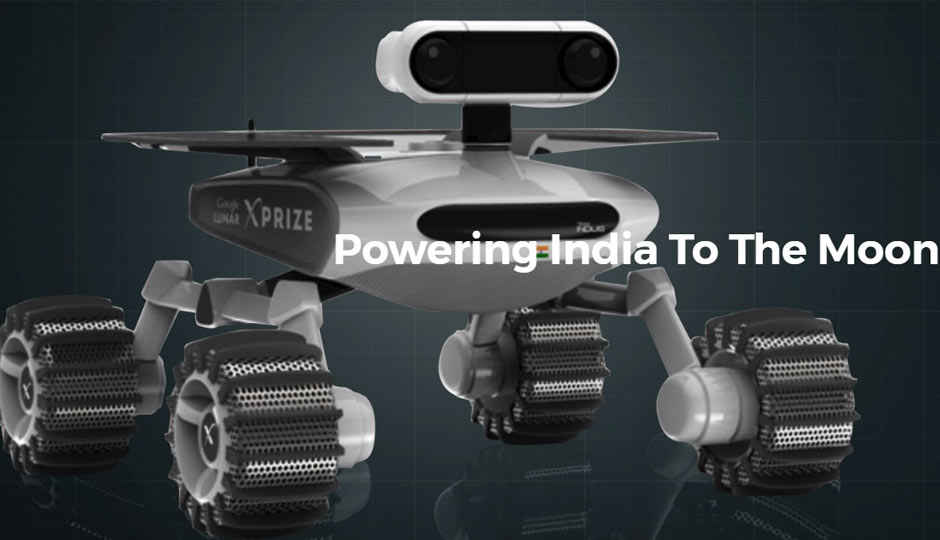
When it comes to space privatisation in India, TeamIndus started off as a moonshot - quite literally. Quite possibly India’s first and only private aerospace startup, TeamIndus entered the Google Lunar XPRIZE competition, announced in 2007, in a bid to win the coveted position of being the first privately funded mission to reach the moon. In 2017, it is one of the five teams from around the world still in the race to the lunar surface. A team of nearly 85 engineers and 12 retired ISRO scientists based out of Bengaluru, TeamIndus aims to revive the interest in the Indian space mission and privatisation of space exploration, something that the entire world is gradually coming to terms with.
The Private dream
“Launch capability and spacecraft development are the 2 major chunks of Transportation. As of now, both are being done by ISRO, and it is a credit to their determination and hard work that India boasts of the best-in-class manufacturing technology for a competitive global cost”, says Adithya Kothandhapani, TeamIndus Jedi Trooper - Mission Systems Engineer. “ISRO has asked the industry (private players/consortiums) to step forward and slowly take up manufacturing, integration and probably operation of PSLV, the workhorse launch vehicle as it has reached a level of maturity and reliability. Spacecraft development has so far been done at ISRO centres. But now the movement towards the private sector, like the Lunar Mission by TeamIndus, and the response to public tenders floated by ISRO for the development of small satellites by a consortium of companies indicates that ISRO is making the push for privatisation.”
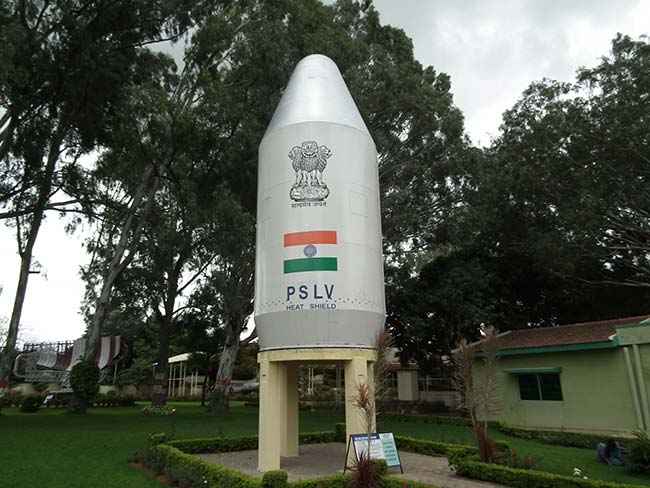
The PSLV heat shield
The recent success in the PSLV mission, along with global achievements in areas like reusable spacecraft, indicate a future where space transportation is as private as airways, maybe even roadways, are today. With ISRO increasingly becoming a strong voice in the world of space exploration, India might be looking at a big role in such a future. “In the near future, transportation is clearly the part of space exploration that is going to be supercharged by privatisation. And this is partly due to the efforts of ISRO, and partly due to the global NewSpace movement where sustainable commercial return is the basis for deploying space and space-allied platforms, technologies and services,” says Adithya, “Privatisation would ultimately help free up ISRO and allow it to focus on more cutting-edge missions, and meanwhile nurture Indian private firms in ultimately reducing the cost to space. Greater the size of this industry in India, greater the need for highly qualified/skilled workforce, and this would snowball into an increase in India’s share of the global space market.”
The Changes
So, what changed? In general, it can be said that India was never behind any other country when it came to the quality of scientists or engineers. In fact, a major portion of these professions in international space agencies is occupied by Indian professionals. So, where did things fall into place? “Significant problems can mostly be attributed to the gap in technological capabilities and demanding quality levels between ISRO and the private sector”, Adithya notes. He adds, “Though ISRO has repeatedly attempted to nurture private enterprises to work and further the production of spacecraft systems and allied technologies, the private sector has been slow to meet the expectations of ISRO. It is only of late that this gap is closing, and it is the perfect timing currently, with TeamIndus also entering the fray which itself has stringent quality requirements that need to be met in order to achieve the objectives of an ambitious mission.” 


Another factor, according to Adithya, which is helping the Indian Space dream is the availability of international payloads to take part in ISRO’s missions, the success of which is being reflected onto Indian research institutes, spurring their interests into taking the dream forward.
Where are the Astronauts?
Many of us used to say that we wanted to be astronauts when we grow up. But somewhere along the way, that dream disappeared for most of us, be what may the reason, and we went into other career paths. Except, some stuck to their passion for space and saw it through. “For many of us at TeamIndus, working on a space mission, that too one so ambitious is literally ‘living our dreams’”, explains Adithya, “and the pure joy we experience while solving challenging problems with a lunar mission as the context is incomparable to doing any other activity (that’s, of course, personal bias!).” 
Shawna Pandya, the third Indian origin female space scientist who will be part of a mission that commences next year
(Image source: Twitter)
“If we can solve the mystery of why the large number of engineering and science graduates passing out of Indian colleges doesn’t convert to an increase in the indigenization and export of high-technology in the field of Aeronautics and Space, we have the answer”, says Adithya about the general lack of interest among Indian students in areas like Aerospace. “It can be attributed to the lack of research-based curriculum, the gap between the syllabus in class and the demands of industry, examinations not being targeted at assessing the candidate’s ability to apply knowledge to solve real-world problems but rather focused on rote recall.”
But all is not lost yet. At least, not if TeamIndus has something to do about it. “The rise in the number of private aerospace companies, and the associated rise in placement opportunities in aerospace and allied sectors is certainly changing the landscape at one end,” says Adithya, “But if there is a corresponding change in the education system and academia, India would be unstoppable in accomplishing things in space. Any space mission is, after all, more about the people who make it happen than the actual spacecraft! This is a good time to nurture those dreams of becoming an astronaut.”

Amazon Internet Services bets big on AI.

Amazon Internet Services bets big on AI

Managing Director of Amazon Internet Services Pvt. Ltd. 


AWS re:Invent 2016 saw a flurry of new announcements in terms new products and upgrades to the existing portfolio, which of them would you put as the most significant from customer interest, specifically in the Indian context?
Bedi: At re:Invent we announced a lot of new services. The ones that are really important for us and are generating a lot of interest from customers would be the services and products that we launched in the Artificial Intelligence space. If you look at AI -  Automatic speech recognition, natural language understanding, computer aided vision, image recognition – all of them need some complex machine learning algorithms and large amount of compute capabilities to crunch all the data. So, as an individual developer, one would need to dedicate lot of time and resources to develop this ground up. With our AI initiatives, we are giving developers and startups scale-able solutions around AI along with security, so that developers can focus on creating core applications and their business models instead of worrying about developing AI capabilities from ground-up. Another advantage with our AI services is the pricing. The investment needed to use AI services is directly linked to the scale and does not require huge sums of development expenses. AI is no longer about a few people with lots of money; now even an individual dev can harness the power of AI to make smarter applications.
Indian customers are positive about these new AI based offerings?
Bedi: Yes, absolutely. We are seeing a lot of interests from banks, travel companies and of course internet based startups. Anybody who is looking to interact with their consumers in a more meaningful way would be interested in our AI offerings. For example, with Polly – our text to speech conversion engine – you don’t need customer representatives to answer calls, you can simply use the engine to convert text responses to speech.

Amazon LEX is one of the AI services that offers speech recognition. But there are variations in terms of accents and pronunciations that differ from country to country. So, are you customizing voice engines to understand local languages?
Bedi: Absolutely. We understand the nuances of working on the voice recognition space. For example, Polly supports 24 languages and 47 voices, which includes Indian English. We are continuously localizing our AI engines. We have also been doing a lot of AI and machine learning, at Amazon.com.
Lightsail is another brand new product that was announced at re: Invent 2016. It targets a completely new segment that Amazon Internet Services is entering. Can you tell us more about it?
Bedi: Lightsail has particularly seen a lot of excitement in India. If you are building a basic virtual private server to run some specific experiments and tests, what you need is a solution that starts low in terms of cost but with an ability to scale up if the need arises. Lightsail starts at 5$ a server, it’s a low-end offering and has seen a lot of interest in the Indian market. There are quite a few players in the market with similar offerings, but Lightsail offers a very distinct advantage: it offers inter-connectivity with other AWS services. So, with Lightsail you can start small while having the ability to scale to larger AWS environments without having to start afresh.
When it comes to building new services and offerings, is there a roadmap that Amazon Internet Services follows?
Bedi: We don’t have a particular road-map that we get locked into. Unlike many traditional tech companies, that sort of get bound by the roadmaps, we approach the development of new services and features on basis of our interactions with customers. We constantly talk to our customers for feedback and 90% of our new features and services are based on what our customers are telling us. And we prioritize our product development cycle based on the feedback. For example, we run beta programmes with our customers, giving them access to latest tech and features and in return we get valuable feedback that goes into improvising and developing a strong final product. At Amazon, we firmly believe that launching a service is not the finish line. In fact, it’s just the starting point, we engage with customers for feedback and recommendations to constantly improve the product.

Monday, March 13, 2017

You can now access Google Keep from within Google Docs

You can now access Google Keep from within Google Docs
 Google, today, integrated two of its premiere apps - Google Docs and Google Keep. The integration brings Keep within Docs, putting it beside each document that you create. With this, Keep becomes a part of Google’s G Suite apps, allowing users to transfer content to and from the app, while working on Google Docs.
With the new integration, Google Keep will appear as a side-panel on your documents, allowing you to drag and drop content from the app to the documents. The formatting you selected in either side will be preserved after moving to the other. So, if you have a checklist on Keep, you’ll have a bulleted list on Docs, and vice-versa.
Of course, Google’s search functionality also resides within Keep. So, those who keep a lot of notes etc. on Keeps will now be able to search through them. The apps seem to be integrated only on the web right now, although Google’s blog post says it’ll be available on Android, Chrome, iOS and the Web.
As with all new features, this one will also be a phased rollout, which means it may be a few days before you see it. When you do get it, the Keep integration can be accessed from the Tools menu on Google Docs.

Nokia Android Smartphones: The good, the bad and the unknown

Nokia Android Smartphones: The good, the bad and the unknown

While we are all happy and nostalgic with the return of Nokia, it is hard to overlook the fact that the three Android phones announced by the company do not bring any earth-shattering features or innovations to the smartphone arena. In fact, spec-to-spec, they seem rather underwhelming when compared to the stiff competition they face. Having said that, the newly-launched Nokia Android phones do hold some aces up their sleeves, in terms of the ‘pure Android experience’, and the legendary Nokia branding itself. However, the pure Android experience is not an unknown offering in this space, with Motorola doing a fair bit of it since the past couple of years (more on this later).
 
Truth be told, the smartphone landscape has gone through a sea change since the last time when Nokia was sitting pretty, right at the top (times when Nokia E series and N series were the be-all and end-all of the mobile phone business). In 2017, Nokia is staring at a market that is not just a lot bigger, but also a lot more competitive and cutthroat in every aspect. The latest cutting edge smartphone technology is there for the taking for any existing or new player who wishes to enter the market, features and technology are almost commoditised and you’d really have to invest and spend a good amount of time in the R&D stage to develop something that’s truly new and unique. The HMD-made Nokia phones announced at MWC 2017 so far don’t qualify for anything revolutionary or ‘big’ in the smartphone space. Maybe, our expectations are way off, but that’s the truth with every single Nokia fan eagerly waiting for Nokia’s comeback.
The Good: Nokia’s entry would not just challenge the likes of Lenovo and Xiaomi but also make Samsung and Apple wary of how it impacts their value segment (market). Samsung’s Galaxy J series and the Apple iPhone 5s, both of which account for a large chunk of the overall sales numbers, will now have a Nokia 6 to deal with. That essentially means more options for the consumer who is looking for an affordable smartphone from a known brand which has a lot more history in the smartphone space. Even Moto will enjoy the challenge from its long lost rival.
Besides the brand advantage, Nokia’s ‘Pure Android Experience’ is perhaps its best chance to compete in the crowded space, and Google’s Jamie Rosenberg taking the stage at the Nokia MWC 2017 event sent a strong and clear message - Nokia phones will play the ‘Pure Android’ card, and perhaps even fill the void that Nexus has left after Google pulled the plug on what truly was the best example of pure Android smartphones for the masses. If Nokia can occupy the Nexus space and offer Nexus-like devices across various price points, it’ll just be what the doctor ordered, and Google would support them wholeheartedly as it continues to rapidly march towards building a more unified and consistent Android experience.
Lastly, while the designs on the Nokia 3, 5 and 6 aren’t extraordinary, there’s a hint of classic Nokia being sprinkled around that differentiates them from the rather monotonous designs that we’ve seen in the affordable segment. Take the Nokia 3 for example - the polycarbonate back along with the metal frame makes it look unique and reminds us of the well-built Nokia Lumia series which were lauded for their build and design. The polarized glass layer on top of the display is another good example of how Nokia is solving the age old problem of sunlight visibility with a simpler solution. Nice touch, especially when it is offered across all devices.
The Bad: Design is one thing, and performance is another. From what we have seen so far, the focus has been on design and the Android experience, which points at Nokia clearly not wanting to get dragged into the spec war. Having said that, the current market scenario almost demands spec talk, the LG G6 announced at MWC 2017 is perhaps a good example of how analysts (and the tech journo community) clearly pointed at the device missing a current gen flagship SoC. On similar lines, Nokia's Android smartphones also seem to sport entry level SoCs which don't really compete spec-to-spec with competition from Lenovo, Moto and Xiaomi. One would disregard this if Nokia already had a proven track record of optimizing their phones to eke out best possible performance. Bottom line - A Snapdragon 625-based smartphone offered by Xiaomi and Moto will offer better core compute and GPU performance in comparison to the Nokia 6. And, that ain't a great start!
Also, just in case you were expecting Nokia to price their phones cheaper than competition, we seriously doubt Nokia will take that route. Nokia might just benchmark itself with Samsung and perhaps even Moto to an extent on the pricing front. So, it surely won't run away with a clear win in the price-to-spec ratio.
No Nokia flagship says a lot of things. Many were expecting Nokia to return with not just affordable offerings, and a Nokia flagship was on the cards at MWC 2017 from not just a flagship smartphone point-of-view, but also from some sort of innovation on the smartphone tech front. We, for instance, were expecting a grand return of the Nokia PureView camera, what would have thrown a spanner in the works for Samsung and Apple, who are reportedly focusing dearly on the camera/imaging department for their 2017 flagships. Well, no new (read: awesome) tech, no flagship smartphone and a relatively dated hardware spec list makes us a little nervous. But, then again, nothing stops them from taking the stage again in Q2 2017, make a big splash and launch themselves into the premium smartphone arena. Fingers crossed!
The Unknown:Performance aside, it is still not clear how Nokia plans to cater to the world’s third largest smartphone consumer market by value (India stands third after Brazil and China). More to the fact, the company has stated recently that "our core strength is offline but we will also go online to reach a wider audience. However, online and offline product ranges will be different”. So, which phones will be sold offline and what devices will be sold online? Will there be new devices joining the three Nokia phones by the time Nokia becomes operational in India? These questions are yet to be answered.
Beyond that, the other question that poses major concern for all smartphone makers in India is sales and services. Previously, Nokia had a solid customer base and a functional self-owned Nokia Care service network across India. However, in the aftermath of Nokia being dumped by Microsoft and almost all assets being liquified, Nokia and HMD Global have a herculean task at their hands to establish the service network back again.
Nokia 3310: blast from the past that did the job
Beyond smartphones, Nokia also showcased the new 3310, which is a fine example of delivering a phone just for the brand value and the hype for it. The phone is running Nokia’s old Series 30+ operating system and can only make use of the 2G networks to make calls and send text messages. Now, it definitely can't compete with an app-enriched Android device, but that is not the point here. Nokia wanted to ascertain that all eyes should be on it when it launches its budget-segment Android smartphones, and so, a feature phone came to the rescue. 
However, don't look deeper into it, Nokia’s feature phones aren't coming back with full force, although we reckon Nokia will be making a handful to market the brand to the masses all over again. After all, the Finnish company has been “connecting people” for ages now.

Sunday, October 30, 2016

Best travel apps to plan the perfect vacation

Best travel apps to plan the perfect vacation

Summer holidays are upon us and it’s time to plan a holiday! But how do you plan the perfect trip without an expensive travel planner doing all the work for you? Thanks to this little device called the smartphone, you now have access to millions of free travel advisory apps that can do everything from planning your destinations, tickets, hotel bookings and even advising you on how to pack for your trip. So if you are in a DIY mood and want to plan your summer getaway yourself, let these apps do the job with you.

Start with Google
 

The Google search app is the best place to start, if you’re not convinced on the destination you want to visit. Google has just announced its ‘destinations’ feature, which is integrated with Google flights and hotel search. Search with Google on your mobile phone for the continent, country, or state you’d like to travel to and add the word ‘destinations’ in your search to see all available flight and hotel prices instantly. You can also get vacation ideas from Google by searching for a destination and something you’d like to do there, like “spain surfing,” “new zealand hiking,” or “colorado skiing.” Google will suggest spots that fit with your hobbies and interests. Sounds like the perfect start to your plans?

Head to Airbnb

Hotels can get extremely expensive during the holiday season and pricey hotels can really damper your travel plans. Check out the Airbnb app. Airbnb has locals from a particular city or area renting out their own houses/rooms for a reasonable cost. You can find great stay deals that suit your budget and correspond with renters through the app’s in-built messaging feature. Having personally used Airbnb successfully, I can recommend the service to all those who want a staycation in a budget.

Find Tripit

If you are planning your whole vacation yourself, you still need that one comprehensive itinerary to keep track of all your bookings. That’s where Tripit comes in. A lot like Google Now services, Tripit collects all travel data including flight info, cab bookings, hotel bookings and more from your emails and then compiles all this data into a comprehensive itinerary. You can then get all your bookings in a single glance on your smartphone.

Get together on MyPoolin


Travelling with friends and want to pool in and book your tickets/hotels? You and your friends can create a money pool on the MyPoolin app and everyone can pay their own share. The collected amount remains safe and secure for the group. MyPoolin has partnered with the likes of Makemytrip, and allows users to spend the collected amount anyway they like. Users can get a cash code and use it on MyPoolin partner websites, get a prepaid MasterCard delivered to their doorstep or get the cash transferred to their bank accounts. Time to start collecting that money?

Fly with App in the Air

When travelling on a holiday, you often have to take multiple flights. Keeping track of these flights can be extremely annoying. Well, not anymore. App in the Air has an extensive database of airlines and provides real time flight status reports even when you are offline. Moreover, App in the Air also guides you with check-in, boarding, takeoff and landing information of most flights. 


Speak using iHandy Translate

iHandy’s Translate app is one of the best translation apps I have used. Travellers often find themselves lost in translation and that’s when a translation app can be quite handy. Users can simply input what they want to say in their own language and the translate app will change it into the language of your choice. The app can also speak out the translated text, helping you communicate with strangers on the roads, give directions to a cabbie or maybe even show off a little.


Convert using XE Currency

When travelling abroad, most of us lose track of our expenses because of conversion rates. So to keep a constant check on your wallet and how much money you are spending, download the XE Currency app. XE Currency lists almost all world currencies and uses live currency rates to give you accurate results.


Get some rest with LoungeBuddy

Ever felt like sleeping between flights? Wanted to take a shower before getting on a long duration flight? LoungeBuddy is your answer to getting that much needed break at the airport. Most international airports have dedicated sleep & shower lounges for passengers and the LoungeBuddy app helps you find them with a simple search using the airport’s name.


Start packing with PackPoint travel packing list

Packing for a long trip can be confusing and you may miss out on some vital things you need on your vacation. Enter PackPoint. The app is easy to use. All you have to do is enter your destination and period of stay and the app guides you through a list of activities that you may want to take up at your destination. Keeping your choices in mind, the PackPoint app suggests what you should pack and what you can afford to leave out. The app also checks the weather forecast of your travel city and recommends appropriate clothing and accessories needed for the duration of your stay.

What happens in the journey from Space Station to Earth

What happens in the journey from Space Station to Earth

Life in space is difficult. There’s literally nothing to hold you down, and you need to exert an extra amount of pressure to accomplish tasks that are otherwise next to conditioned reflexes on Earth. Commander Scott Kelly spent 340 days out in the International Space Station (ISS), creating a record that has surpassed previous records by a massive margin. He braved the pioneering task set out by the National Aeronautics and Space Administration (NASA) to study the effect of long-term living in space, and in process of accomplishing it with stunning grace, Commander Kelly saw the blooming of flowers in the middle of nowhere, celebrated Halloween, and even played pranks on co-astronauts.

All of this was certainly strenuous, as a single wrong calculation may set off years of planning. The most difficult bit, however, is the re-entry to planet Earth. The journey from Earth to space is a saga of exiting our natural habitat in a cockpit surrounded by tons of steel, imbibing high pressure levels, and surviving in microgravity. The landing back home, however, is an incredible few minutes of decimal perfect calculations and forces that can go as high up as 9g. Before we discuss this further, here’s a glimpse of the soft landing that astronauts undergo when they return from the ISS. The clip has been put together by the fabulous folks at the European Space Agency, showing the Soyuz’s landing back on Earth, decelerating from a speed of nearly 28,000 kmph, to a standstill on ground.

It is here that you realise that the landing procedure involves an incredible amount of in-cabin pressure. The International Space Station traverses outside the Earth at a speed of about 28,000 kilometres per hour. Once the landing program is decided, the ground is inspected by an on-ground team, who can travel on any harsh terrain. Weather forecasts and ground situations are analysed, the landing trajectory is decided, and preparation begins to bring the astronauts back home. The astronauts then go through a simulated landing procedure inside the Soyuz simulator of the ISS, emergency landing schedules, latest statistics and data from the Space Station, and every other knobs and dials are placed at the perfect points.
The landing module detaches from the space station at about 120 cm/s, and after an interval that sees the ISS and the module safely away from each other, engines are engaged to thrust the landing module into orbit. This thrust is done at exact points in orbit, so that the module does not overshoot the calculated landing trajectory. The de-burning procedure is then engaged, introducing the module into the Earth’s atmosphere. The purpose of the de-orbit burn is to increase speed, that changes the trajectory to the exact optimum. As the module enters the atmosphere, friction with the upper layers leads to extremely high temperature levels outside the module, burning up the outer surface of the landing module. The astronauts are insulated from this heat by protective layers, led from the front by a heat shield that protects the retro thrusters and the outer bearing of the module.
"If calculations are wrong, cabin pressure can go as high as 9g"
The engines on the front face are re-engaged to present a thrust against the momentum, controlling the speed of the module to ease the re-entry. This burning is essential to offload resources and set the correct trajectory, and the precise duration of engine burn is set to 4 minutes and 45 seconds. The next bit is the separation of the entire landing vehicle. At an altitude of 140 kilometres, the vehicle separates into three separate parts - the orbital module, the landing module and the instrument compartment. While the landing module continues on the trajectory, the other two modules disintegrate and burn up in the atmosphere. The next bit is the automated control of the module’s rotation to optimise the trajectory, which is crucial in fixing the right amount of pressure level. Even at the correct trajectory, astronauts inside the landing module experience pressure levels of 4g. If the path is calculated wrong, the pressure exerted by the atmosphere can go up as high as 9g.
In the following few minutes, after the landing module gets its trajectory right, it begins its drastic deceleration. From the orbital speed, it decelerates to 800 kmph, at an altitude of about 10.5km. After this speed is attained, parachutes are deployed to halter its momentum even further. The parachutes are an aspect on which the astronauts do not have any control, and after its deployment, the module also loads of the heat-insulating shields and extra fuel and combustion load, to prevent any chances of explosion upon ground impact.

The final round of impact are the retro engines, which deploy when the module is 70cm from the ground, to ensure soft landing. This, however, is anything but soft. The astronauts’ seats are lifted to prevent the impact from shattering the bodies. This is the heaviest impact point in the module’s trajectory, which also prevents the module from toppling over. The retro engines kick back at the module to break its motion, bringing it to a halt.
The ground impact team monitors the entire trajectory from the ground, and stands by the landing zone. Helicopters and rescue vehicles reach by the module right after the impact, and the astronauts are brought out of the cockpit soon after, to the breath of fresh air - a world that was miles away only a few hours ago. As for Commander Kelly, he smelled fresh air and normal gravitational force for the first time in nearly one year.
Welcome back, Commander

iPhones may feature OLED displays by 2017

iPhones may feature OLED displays by 2017

Apple may be planning to introduce iPhones with OLED displays in 2017. According to a news report by Nikkei, Apple had earlier planned to use the displays by 2018 or 2019, but the company now plans to ship OLED iPhones by next year. In addition, it was earlier suggested that Apple was planning to introduce iPhones with a curved OLED display. However, this report claims that the company will not be introducing the curved design, as it is introducing the displays sooner than expected.
Back in December 2015, Apple had reportedly been in touch with LG Display Co. Ltd. and Samsung Electronics Co. Ltd. to manufacture OLED displays for upcoming iPhones. As per the report, the three companies were in the final phase of signing the deal and added that LG and Samsung were planning a capital expenditure of around KRW 15 trillion. There were also reports that Apple may be working on OLED and micro-LED technology in its new laboratory in Taiwan. It was suggested that the company is developing flexible OLEDs for use in iPhones and iPads. The laboratory is also tipped to be developing micro-LED displays.

New smart glasses allow users to type via a virtual keyboard

New smart glasses allow users to type via a virtual keyboard

Researchers at the Korea Advanced Institute of Science and Technology (KAIST) have developed smart glasses that offer users a virtual keyboard to type text. The glasses, called K-Glass 3, comes with a stereo-vision camera located at the front of the device. The two lenses of the camera work similar to the way human eyes work, and can sense depth. This allows users to surf the internet and type text using the virtual keyboard, or even play a virtual piano in thin air.

Additionally, K-Glass 3 uses a pre-processing core to use stereo-vision as well as seven deep-learning cores to speed up real-time screen recognition. The researchers say that the camera’s vision algorithm has an energy efficiency of 20 milliwatts on average, allowing it to be used for 24 hours without interruption. The multi-core processor becomes idle when it detects no motion from the user. The team uses deep-learning  multi-core technology that is dedicated for mobile devices  to recognise gesture inputs. This has improved the glass’s accuracy with images and speed, while also shortening the time needed to process and analyse data.


MIT Research has ultra-thin solar cells lighter than a soap bubble

MIT Research has ultra-thin solar cells lighter than a soap bubbl...

A team of engineers at Massachusetts Institute of Technology (MIT) has developed a concept of incredibly thin photovoltaic cells that are lighter than a soap bubble. These solar cells are only a laboratory product as of now, and can be placed anywhere - balloons, shirt sleeves, on mobile devices, or, as MIT states, inside a soap bubble. The cells have about 1/50th the thickness of a hair strand, and is so light that you stand at the risk of blowing it away with a single breath.
Although it may take years to move the concept to the commercial forefront, the concept lays proof of more widespread and easier harvesting of solar energy in future. With constant efforts being laid underground for promoting clean energy alternatives, the minuscule chipsets can be serially arranged to harvest enough power to operate helium balloons, household lights, and even automobiles. The engineering team at MIT Research, instead of relying on separately fabricating the solar cell and the protective base layer with the glass or plastic substrate, forged the three together. This led to negating the inefficient objects that lower the power-to-weight ratio of standard solar cells, and as MIT Professor Vladimir Bulovic puts it, “The innovative step is the realization that you can grow the substrate at the same time as you grow the device.”
In this incredibly light solar cell, the team of engineers used parylene, a commonly-used flexible polymer, as both the substrate (the middle layer) and the overcoating, while the primary light-absorbing layer was made of an organic compound called Dibutyl phthalate (DBP). The layers are “grown” or fused together using vapour deposition techniques inside a vacuum room in room temperature. This is yet another advantage of the tiny solar cell against the traditional ones, which require harsh chemicals and high temperature environments to forge.
The researchers laid more importance to the point that this may not be the only configuration for manufacturing the cells, and quantum dots can also be considered as an efficient alternative to DBP, and these can be laid on to other substrates like fabric or paper, for practical implementation. The output demonstration showed power generation of nearly 6W/gram, which is nearly 400 times higher than the conventional silicon solar cells.
"We think it’s a lot of hard work ahead, but likely no miracles needed"
This new concept technology may have the massive potential to revive solar energy from its present state of expensive alternative. Solar energy harvesting matured before it peaked in the labs, and as a result, failed to fulfill its potential as widely-usable clean energy resource, until now. With the latest technology, the solar cell chips can be placed practically anywhere, on any surface, and with the right combination of materials and circuitry, generate enough power required to power everyday livelihood. The days may be far away, but the MIT team is sure of its future. “How many miracles does it take to make it scalable? We think it’s a lot of hard work ahead, but likely no miracles needed.”
We certainly hope so, Prof. Bulovic.

Saturday, October 29, 2016

Uninstalling Facebook from your iPhone may improve battery by 15%

Uninstalling Facebook from your iPhone may improve battery by 15%

Uninstalling the Facebook app from your iPhone may improve the device’s battery life. According to a report by The Guardian, removing the Facebook app from the phone can save up to 15% of an iPhone’s battery life. The report also says that the app was consuming around 500MB of storage. This included the 11MB that the app takes, while the rest of cache.
As per The Guardian, after a week without the app, it was noted that the iPhone had 15% more battery by the end of the day as compared to when the app was installed. Instead of the app, it is suggested that the users access the social media service via the mobile site on Safari. It was noted that using the service via the browser was “almost as good as the app.” However, there was no ‘share-to’ feature and users will have to manually share picture via the ‘post photos’ button on the mobile site. Other features, such as ‘Instant Articles’ were also not available.
The test was conducted on an iPhone 6s Plus and the Messenger app was left installed. To ensure that it was not an isolated case, other iPhone users were asked to conduct a similar test. All of them reported reported similar results when they used Facebook via the Safari browser rather than having the app. The report also notes that results may vary with the iPhone 6s due to its smaller battery, but it’s possible that this will extend the battery life of any iPhone. A Facebook spokesperson said that the company was investigating the issue.
Last year, the company had admitted that its iOS app was draining iPhone batteries faster than normal. Ari Grant, Facebook’s Engineering Manager posted an explanation for the problem on his page. He said that the company had “found a few key issues” within the app and had found places for improvement.